
Storytelling Begins Before Writing
An ai storytelling generator is most powerful for children when it respects a simple fact: children usually become storytellers before they become writers. They tell stories with gestures, drawings, sound effects, half-sentences, and sudden character ideas. The adult hears the meaning before the page ever exists.
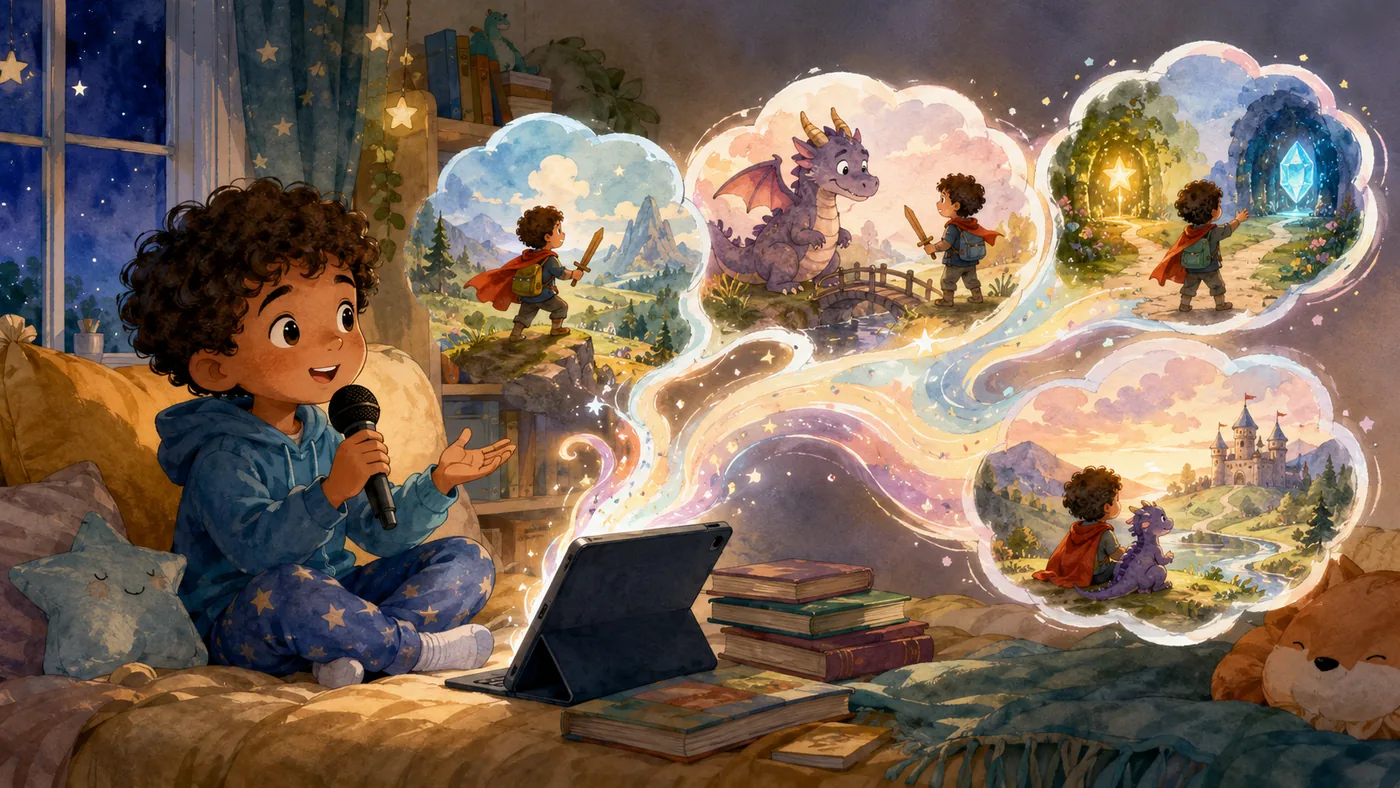
TaleHug is built for that early stage. Instead of requiring a child to type a polished prompt, it can support family storytelling from a small spoken idea, a parent-guided sentence, or a drawing. This makes it useful for language confidence, especially for children who have big ideas but limited writing stamina.
When a child sees their spoken idea become a picture book, they receive a strong message: my words can build something.
Turning Voice into a Reading Object
Oral language is a foundation for later literacy. Children who practice explaining, predicting, describing, and retelling are building skills they will use when reading and writing. TaleHug helps because it can turn a spoken idea into an object the family can revisit.
A child might say, "A little cloud wants to sing but is shy." TaleHug can help shape that into a short storybook. Then the parent can use the generated pages for conversation:
- What did the cloud say first?
- How did the cloud feel?
- Who listened?
- What changed at the end?
The child is no longer speaking into the air. They are speaking about a shared visual text. That gives the adult more chances to introduce vocabulary and sentence patterns.
Supporting Children Who Are Not Ready to Write
Many young children have strong stories but cannot yet write them down. This gap can be frustrating. A child may feel that writing is the hard part and storytelling belongs to adults. TaleHug helps reduce that gap by letting the child participate through speech and images.
This does not mean the child skips literacy. It means the child enters literacy through a doorway that matches their current development. They can describe a character, choose a setting, explain a problem, and react to the generated pages. The adult can then connect spoken language to printed language:
- "You said the turtle was brave. Let's find the word brave."
- "This page says the turtle waited. Can you show me waiting?"
- "What word should we use instead of big: huge, tall, or wide?"
That kind of interaction is more valuable than simply receiving a finished AI story.
Listening Skills Through Page-by-Page Reading
Storytelling is not only speaking. It is listening. A child must listen to the page, remember the character, and connect the current scene to the previous one. TaleHug's short storybook format supports this because each page gives the child a manageable listening task.
The adult can pause after each page and ask a small question. If the child answers from the picture, that still counts as comprehension. If the child adds a detail, that becomes a chance to expand language:
Child: "The dragon sad."
Adult: "Yes, the dragon feels sad because the lantern is broken."
This responsive expansion is a core part of language growth. TaleHug gives families fresh material for it, especially when children want stories about their own ideas.
Building Vocabulary Without Flashcards
A good story can teach vocabulary naturally. TaleHug can generate stories around themes a child is already curious about: space, animals, school, weather, feelings, food, or friendship. The adult can guide the prompt to include target words, but the words still appear inside a meaningful scene.
For example:
- A story about a garden can teach sprout, soil, gentle, shade, and bloom.
- A story about a boat can teach float, anchor, current, shore, and rescue.
- A story about emotions can teach worried, proud, patient, jealous, and relieved.
Children remember words better when they can connect them to pictures and feelings. TaleHug's visual-first style supports that connection.
Why TaleHug Is Stronger Than a Generic Chat Story
Generic AI chat tools often produce long responses. That may impress adults, but it can overload young children. TaleHug's advantage is that it packages storytelling into a picture book rhythm. The story is easier to read aloud. The child has time to look, listen, point, and respond.
The product also keeps parents in the loop. A parent can review tone, shorten text, and decide whether the story is appropriate for bedtime, classroom use, or language practice. For children's storytelling, that adult guidance is essential.
A Simple Speaking Activity
Try this TaleHug routine:
- Ask the child to tell one sentence about a character.
- Ask one follow-up question: "What does the character want?"
- Generate a short storybook draft.
- Read it aloud.
- Ask the child to retell the story from the pictures.
- Let the child change one page and explain why.
This routine practices speaking, listening, memory, vocabulary, and reasoning. It also keeps the child emotionally invested because the original idea came from them.
The Real Product Advantage
An ai storytelling generator should not replace a parent's voice. It should give that voice more material to work with. TaleHug helps families turn children's spoken ideas into visual stories that can be read, discussed, revised, and retold.
That is why the product is useful for language confidence. It gives children a safe way to hear their own ideas become stories, then gives them another chance to tell those stories back.