
Making the First Story Feel Easy
Many parents search for a free ai story generator because they are not ready to commit to a complex writing tool. They may have one bedtime idea, one child drawing, or one rainy afternoon to fill. That first moment matters. If the tool asks for a long setup, a complicated prompt, or a payment decision before the family has seen any creative value, the child usually walks away.
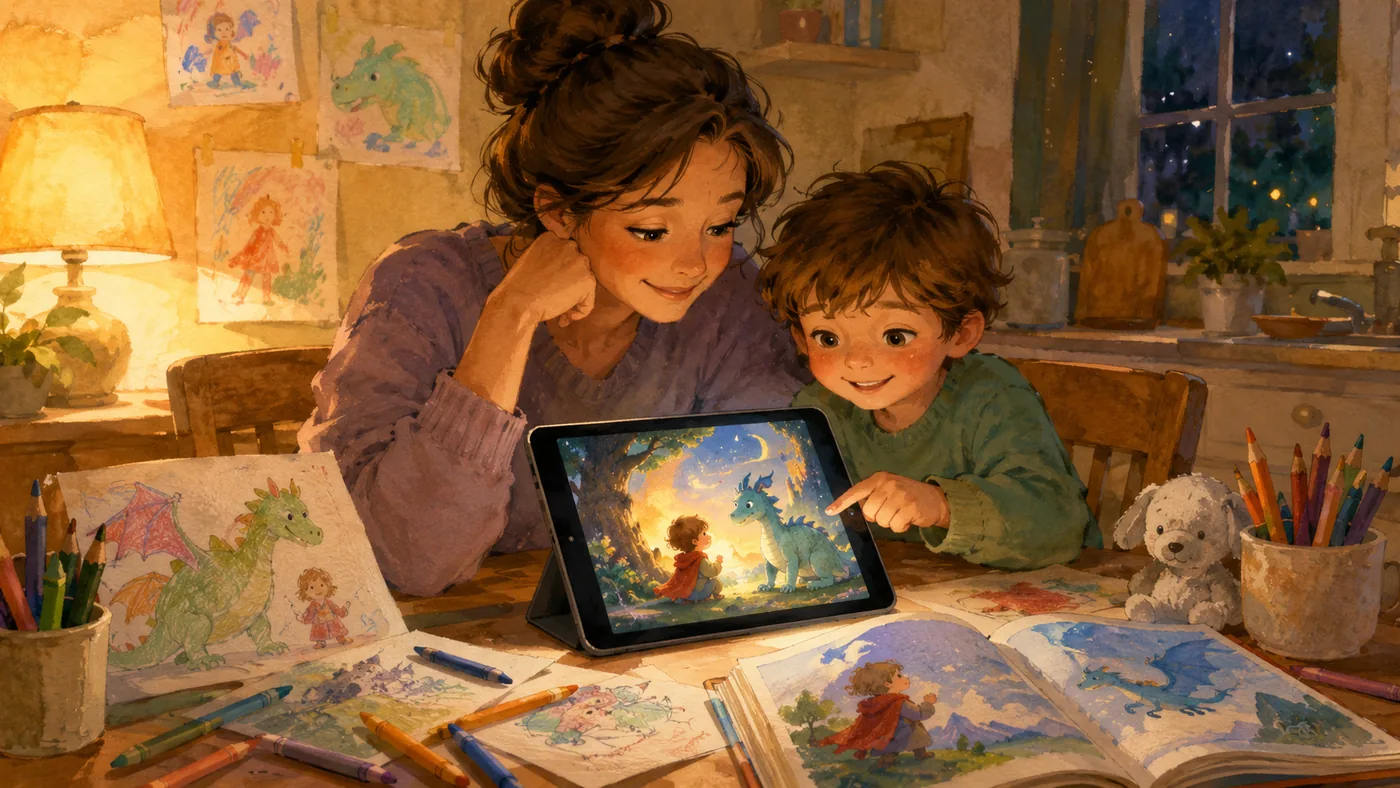
TaleHug is valuable because it treats the first story as a low-pressure creative experiment. A parent can begin with a small idea: a lost yellow mitten, a sleepy moon rabbit, a truck that is nervous about school, or a child who wants to draw a garden dragon. The goal is not to produce a polished novel. The goal is to help a child see that an idea can become a page, a page can become a sequence, and a sequence can become something worth reading together.
This changes the emotional tone of AI storytelling. Instead of making the parent feel like they must master a professional writing interface, TaleHug makes the activity feel like co-reading and co-making. The child supplies the spark. The adult guides the tone. The tool turns that shared spark into a visual-first storybook draft.
Why Low-Cost Starts Help Children Participate
Children do not usually think in finished plots. They think in fragments: a funny animal, a color, a sound, a question, a dream from last night. A free or low-barrier story generator is useful when it can accept those fragments without judging them. TaleHug supports that kind of early creativity by allowing story ideas to begin from simple prompts, voice notes, and drawings.
That matters because children are more willing to participate when the adult is not worried about wasting a credit on an imperfect idea. A child can say, "What if the backpack forgot where school was?" and the parent can try it. If the first version is too silly, too short, or missing the child's favorite detail, the family can refine the idea together.
This process teaches a practical creative lesson: first drafts are not failures. They are starting points.
For young children, that lesson is more important than the final story. TaleHug gives families a way to model revision gently. Parents can ask:
- What should happen first?
- What does the character want?
- What picture should we see on this page?
- Should the ending feel funny, brave, or calm?
These questions turn a free story session into a thinking session. The child learns that creativity is something people shape, not something that appears perfectly on the first try.
Building a Reading Habit Before Buying More Books
Printed books are essential, but children also love stories that reflect their own world. A generic shelf may not have a book about a child's exact drawing, a pet's nickname, or a classroom worry that happened that morning. TaleHug helps fill that gap by creating personalized reading material quickly.
For families, this can support a more consistent reading habit. A parent does not need to wait for a holiday, a bookstore trip, or a school assignment. A small daily moment can become a short storybook:
- A bedtime story about being brave in the dark.
- A morning story about getting dressed without rushing.
- A weekend story about sharing toys with a cousin.
- A language practice story using new vocabulary from school.
The benefit is not that AI replaces children's literature. It does not. The benefit is that TaleHug can make reading feel closer to a child's daily life. When children recognize their own worries, jokes, and drawings inside a story, they lean in. They ask more questions. They point at pictures. They request another page.
That engagement is where reading habits begin.
Keeping the Experience Safer Than Open-Ended AI Tools
Parents who search for a free AI writing tool often find open-ended systems designed for adults. These tools may generate long text, unsuitable themes, or public outputs by default. TaleHug is stronger for children because it is built around a more controlled storybook pattern: short pages, gentle themes, private drafts, and adult review.
A family tool should not reward shock value. It should reward clarity, warmth, and repeatable reading. TaleHug's picture-first design naturally limits overstimulation. Instead of a huge block of text, the child sees one scene at a time. Instead of an endless chat, the family gets a bounded story draft.
That boundary is a product advantage. For children, structure creates safety. A four-to-ten-page storybook is easier to understand than an infinite generator. A private draft is safer than a public feed. A parent-approved story is more appropriate than an unfiltered response.
Why TaleHug Is More Than "Free"
The best reason to use TaleHug is not simply that families can start easily. It is that the product respects what an early story session needs: speed, safety, images, and parent control. A free ai story generator is useful only when it helps a child create something they can actually read, remember, and talk about.
TaleHug does that by turning small ideas into visual sequences. It lowers the cost of trying, but it does not lower the standard for the child's experience. The result is a more approachable path into reading, drawing, language practice, and family storytelling.
For parents, that makes the first story easier to start. For children, it makes the first story feel like theirs.