Reading Motivation Through Ownership
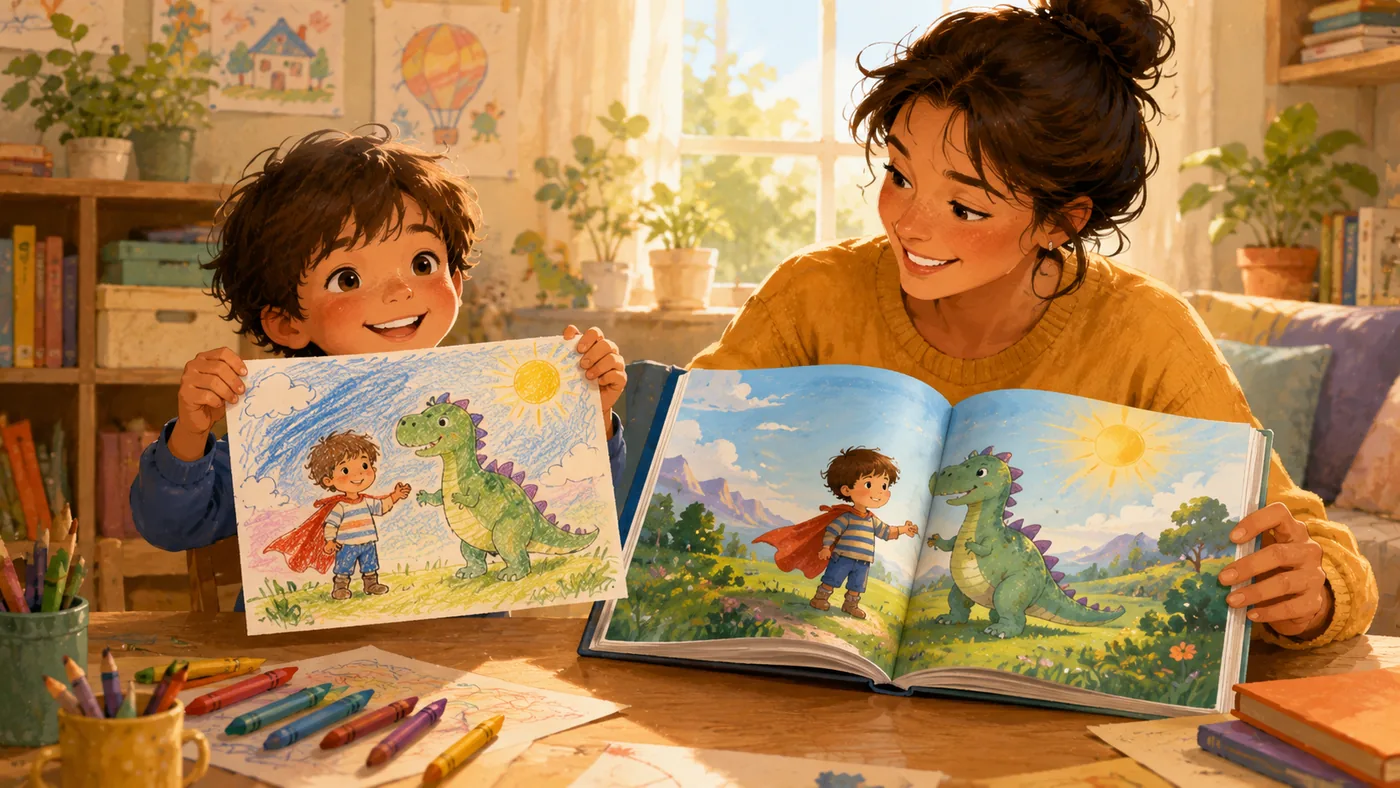
Ownership is powerful. When a child says, "That's my dragon," the child is more likely to sit through the story. TaleHug supports that feeling by turning small personal ideas into polished storybook drafts. The child may not own every sentence, but they recognize the seed.
This matters for reluctant readers. Some children resist reading because books feel disconnected from their interests. A personalized storybook can lower that resistance. If the story is about the child's invented character, favorite color, or classroom worry, the child has a reason to care.
TaleHug does not replace classic picture books. Instead, it can sit beside them as a motivation tool. Families can use personalized stories to warm up a reading routine, then move into printed books with more focus.
Visual Literacy Is Real Literacy
Visual literacy is the ability to interpret images, notice relationships, and connect visual evidence to meaning. In a storybook, children practice visual literacy constantly. They infer emotion from posture. They identify setting from background details. They compare what the text says with what the picture shows.
TaleHug can support this because its storybooks are page-based and illustration-led. The adult can ask:
- How do you know the character is worried?
- What changed between this page and the last page?
- Which object tells us where they are?
- What do you think will happen next?
These questions train attention. They also help children understand that pictures are not just decorations. Pictures carry information.
A Better Fit Than Long AI Text
Many AI writing tools produce long stories that look impressive to adults but do not match a child's attention span. A long paragraph can bury the story's emotional core. It can also leave the child passive while the adult reads.
TaleHug's storybook format is a better fit for young readers because it creates a rhythm: look, listen, predict, turn the page. That rhythm keeps the child active. It also gives the adult natural pause points for discussion.
The product advantage is practical. A family can use TaleHug during bedtime, a classroom center, a library activity, or a quiet weekend session. The output is short enough to finish and visual enough to revisit.
Helping Children Notice Art Styles
An AI storybook generator can also nurture artistic interest. Children can compare how a character looks in different scenes, discuss color choices, and talk about mood. A parent might ask, "Does this page feel sunny or sleepy?" or "What color would make the garden feel magical?"
These conversations help children develop taste and visual vocabulary. They learn words like soft, bright, shadow, pattern, background, and texture. They also learn that pictures can be revised. If a page does not match the child's idea, that is not a failure. It is a chance to explain the idea more clearly.
A Family Activity That Combines Drawing and Reading
One useful TaleHug routine is the draw-read-redraw loop:
- The child draws a simple character.
- The parent uses TaleHug to create a short storybook from the idea.
- The family reads the story aloud.
- The child draws one new page after the ending.
- The adult asks the child to explain the new page.
This loop connects drawing, reading, speaking, and narrative thinking. It turns the storybook into a living creative object.
Why TaleHug Stands Out
The best ai storybook generator for children is not just fast. It understands that children learn through pictures, repetition, and participation. TaleHug's value is that it makes the child a co-creator while keeping the reading experience simple and guided.
For parents, that means easier story creation. For children, it means pictures that invite attention, stories that feel personal, and a stronger reason to love reading.